
Lessons From My Life As A Gaijin

Updated: Feb 18
I lived in Japan for three years after college as a member of the JET Program. I was a Gaijin. As you may have guessed, "gaijin" means "foreigner" or "outsider." Through the JET Program, people from around the world are hired by the Japanese Ministry of Education to teach English in Japan's public schools. The program provides training and structure to provide support and community throughout the experience, but on a day to day basis, you are operating on your own. I thought, "there's support, there's structure - no problem."
In the months before we left for Japan, I and the other JET Program participants went through extensive training on what to expect and how to properly act and react in Japanese culture. Don't write on someone's business card because business cards are significant and personal and writing on one can be construed as disrespect. Make sure to stay at work later than your boss to show respect in the hierarchy. Don't be unnecessarily loud or stand out in a crowd. Use the Japanese equivalent of "I'm sorry" in all situations even if you've done nothing wrong. Make sure that you always wear good socks because you'll need to take off your shoes a lot. Like any other culture, Japanese culture is full of rules that are part of the social contract in being a member of the society. I thought I knew what to expect from life in Japan as a foreigner with all of my training and preparation. But being a foreigner living abroad was much more vivid IRL than training had ever indicated.
I had lived in England for four months a couple years previously during a college term abroad so being a foreigner in a different culture wasn't a new experience for me. But in England, I could speak the language and although the US and UK are very different cultures, there are still a number of similarities since both are Western cultures. When I arrived in Japan, though, I was essentially illiterate in most cases, even with a year of Japanese classes under my belt. I was moving through daily life in a culture where almost everything was different than my daily life in the US, from food to greetings to the way people approach a conversation.
The first couple months of life in Japan were exciting. Everything was shiny and new and every JET Program member had a strong support system to help them. In addition, being a teacher in Japan comes with an automatic level of respect, so we were important before we had ever earned a place of importance in our towns and cities. However, after the sparkle wore off and I actually started feeling my feelings and surroundings in daily life in this new setting, I realized that I needed to operate at a level of vulnerability and humility than I ever had before in my life. I realized years later that I learned many significant lessons through my vivid and humbling experiences as a foreigner living abroad.
Lesson 1: It is an extremely rewarding and fulfilling experience when you make yourself open enough to ask for help. It may take a period of adjustment to get yourself to the point of being open but that's all part of the very humbling journey. Once you get into a place of acceptance that you need the consistent help of others to operate effectively in a different culture on a daily basis (and not being able to read most signs on a daily basis helps with this reset), a huge weight is lifted off your shoulders. At least it was for me.
Lesson 2: Don't try to fit in perfectly when you are meant to stand out. I only speak for myself but it seemed through all of the training and preparation before and on the JET Program, the intention was to help us operate effectively and fit into the culture. But as a foreigner in a fairly homogenous society, you will always stick out, even when you do your best to fit in. Even in moments where I could read all of the signs around me, spoke the language perfectly (which was rare), and had impeccable manners, I was still going to be the thing that didn't belong. It's an opportunity to own this experience of standing out and enjoy it.
Lesson 3: There's always something new to learn. This is one lesson that I realize that I have taken advantage of throughout my life. When you're in your typical setting going through everyday life, it's easy just to get stuck in your routine, moving from task to task. But when you're in an unfamiliar place, everything is new. Since everything is new it's easy to dive into learning new things. This something that we forget when we're going through our daily routine. But even when we're in a place that we're used to, there are always new things to learn and explore. We just may need to dig below the surface.
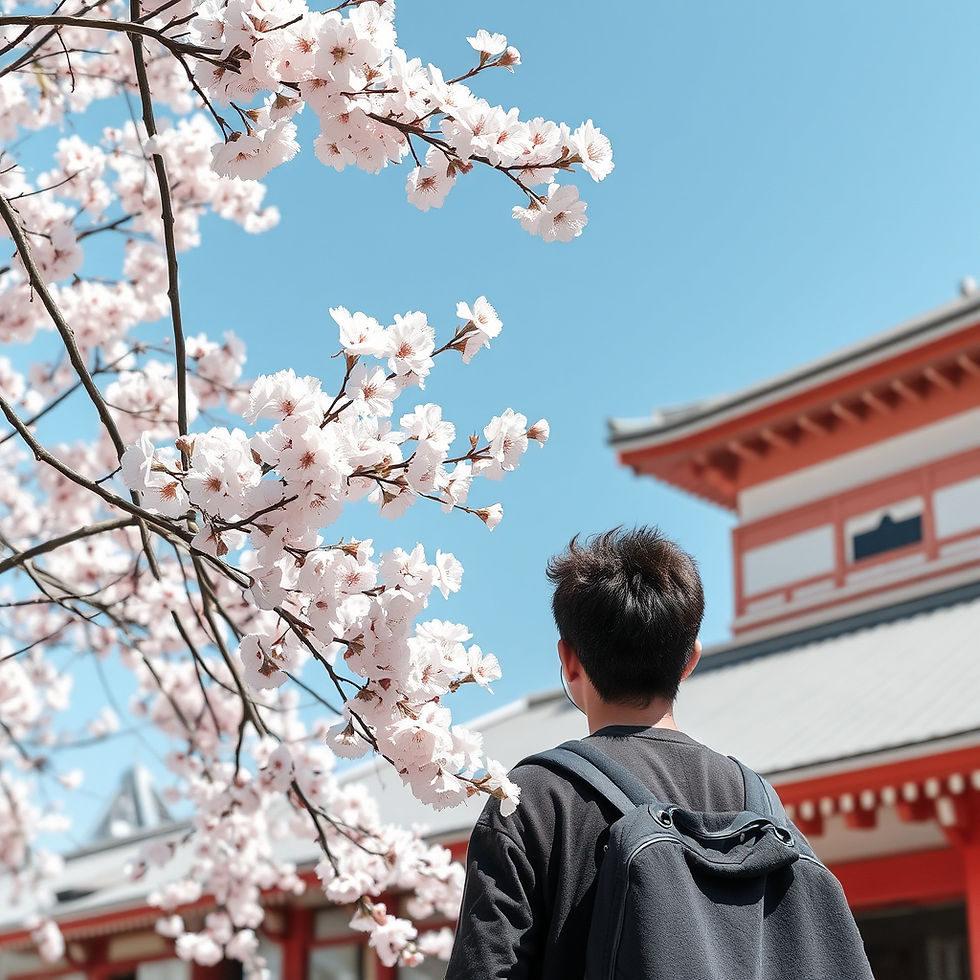
Lesson 4: Silence is golden. This is one rule in Japanese culture that you learn quickly and often while living there. My Japanese friends and coworkers were comfortable in general in silence and lulls in conversations. It was pointed out early in our training that this high comfort level with silence is one of the glaring differences between Japanese culture and Western societies. People in Western cultures are typically uncomfortable with silence and often feel compelled to fill gaps in conversation with unnecessary noise or chatter. I certainly fit this description when I arrived in Japan. After spending three years in Japan, I learned to not only tolerate the silence but to also enjoy it. Not feeling the need to speak all the time certainly has the positive effect of decreasing one's stress level.
Lesson 5: Having adventures is one of the most important parts of life. I joined the JET Program because I wasn't sure if I should go to grad school or get a job after college and I knew it was an amazing opportunity that would give me some time for figure things out. I am so thankful that I made this decision. Living as a foreigner in a completely different culture and taking the opportunity to travel whenever possible while I was abroad gave me adventures that my ten year old self would never even had imagined. There's a whole world out there. Even when you're living daily life in your city or town, remember that there's always room for adventures.
There may be hundreds more lessons that I can think of from my life as a gaijin, but these are five that jump out when I think of my time in Japan. Check back here on my blog again in the future to hear more about my adventures exploring the world.


Comments